Thursday, December 6, 2018

The Imperative of African Leadership - Fulfilling the Continent’s Massive Potential

Grant T. Harris is CEO of Harris Africa Partners LLC and advises companies on strategy, policy, and risk mitigation with respect to doing business in Africa. He previously served as Special Assistant to President Obama and Senior Director for African Affairs at the White House.


In recent years, an “Africa rising” narrative has foretold a continent of growing economic and strategic importance—a continent coming into its own. While no single narrative can fully encapsulate a dynamic and diverse region of 49 countries and one billion people (in sub-Saharan Africa), there is truth to the storyline that Africa is becoming increasingly important in the global economic order, and that it will further grow in strength and influence over time. This is partly because Africa has for too long been marginalized and insufficiently integrated into the global economy, and partly because of the region’s great potential.

Yet even assuming that greater global influence is to some degree foreordained, the speed, depth, and sustainability of Africa’s growth will depend on the presence—or absence—of African political leadership. It is hardly revolutionary to note that leadership and political will lay at the crux of governance and economic development; nevertheless, realizing Africa’s immense potential will require the region’s leaders to pursue significant policy reforms-some of which will not be easy. Specifically, Africa’s leaders need to confront three fundamental needs: (1) making economic growth more inclusive and sustainable; (2) engaging and providing opportunities for a young population; and (3) strengthening democratic institutions.
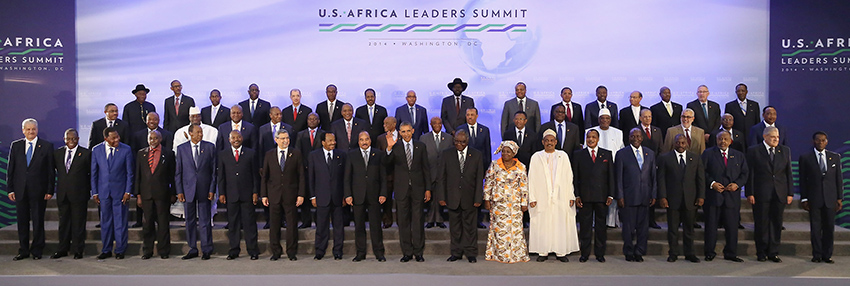
The 2014 U.S.-Africa Leaders Summit in Washington, DC / Photo: Guliver Image/Getty Images

In highlighting the political and economic governance challenges and opportunities at hand in sub-Saharan Africa (the focus of this article, and the point of reference when using the term “Africa”), engaging in some form of generalization becomes inevitable. This is done with great caution, with an understanding that country-specific nuance should always trump monolithic narratives, and without implying that all African countries face the same issues.

Seeking Inclusive Economic Growth

Africa has enormous economic potential and has been experiencing incredible economic growth. Between 2000 and 2012, Africa’s GDP growth averaged over 4.5 percent annually, compared to around 2 percent per year in the prior two decades, according to the World Bank. Africa’s GDP growth remained steady in 2013 and 2014 (at 4.2 percent and 4.6 percent, respectively), dipped to 3.4 percent in 2015 (particularly in the face of weakened commodity prices), and is currently predicted to accelerate to 4.2 percent in 2016.

Africa’s growth has thus, on average, outpaced the average growth rate of the world economy since 2000, even when weathering global economic storms, according to the United Nations Conference on Trade and Development (UNCTAD). Moreover, foreign direct investment (FDI), which includes stepped up investment by China, has increased fivefold to approximately $60 billion since 2000. In sum, Africa’s economic potential is attracting increasing attention, particularly in light of the region’s growing middle class, a budding service sector, and enormous potential in sectors such as agriculture and manufacturing.

Nonetheless, it is important to keep this growth in perspective. Behind these GDP growth numbers lay external as well as internal factors, and they were aided by commodity prices and resource extraction, in addition to increased domestic demand, improved macroeconomic management, increased public investment, and improvements in the business environment.

More to the point, the GDP of Africa remains, in absolute terms, small: at an estimated $1.7 trillion in 2014, this is still less than the GDP of Russia, and makes up just 2.7 percent of global GDP. Thus, statistics about economic growth across the region (e.g., that Africa has been home to six of 10 of the world’s fastest growing economies) are helpful in explaining trends, but we must be mindful that many of these fast growing economies are starting from a very low baseline.

Most importantly, it is vital to unpack the relative depth of this economic growth. In spite of these impressive economic gains, the World Bank explains that Africa’s growth “has not been as pro-poor as growth in other regions.” Elsewhere, a 1 percent increase in average per capita consumption has reduced poverty on average by 2 percent, whereas that same increase in per capita consumption in Africa has only reduced poverty on average by 0.69 percent. As a result, the World Bank reports that the proportion of the African population living in extreme poverty declined between 1990 and 2012 (from 56.8 percent to 42.7 percent) but, given population growth, the absolute number of people living in extreme poverty actually increased (from 287.6 million to 388.8 million). At the same time, Africa has the highest gender inequality and second-highest income inequality compared to other regions.

Unfortunately, many countries in Africa are experiencing what UNCTAD terms the “wrong type of growth,” meaning that economic gains have not substantially reduced joblessness or poverty because African countries have been unsuccessful in significantly increasing manufacturing development or otherwise generating productive capacities. Thus, recent economic growth is unlikely to lead to sustained development unless, as the African Center for Economic Transformation (ACET) argues, that growth is supported by economic transformation, including diversified production and exports; increased export competitiveness; gains in productivity; improved technology; and progress in human economic well-being, including by expanding formal productive employment.

Atop the aforementioned challenges loom two major impediments to growth: lack of infrastructure and electricity. To start with, Africa’s overall infrastructure needs remain massive. For instance, closing the infrastructure gap requires $93 billion annually over the next 10 years, according to the African Development Bank (AfDB). Based on amounts provided to date, this leaves a financing gap of over $50 billion per year. The AfDB further estimates that the lack or poor quality of infrastructure—particularly with respect to electricity, water, roads, and information and communications technology—reduces national economic growth by 2 percentage points every year, and stifles firm productivity by as much as 40 percent.

The persistent lack of access to electricity is also a critical factor hobbling Africa’s growth. With over 600 million Africans (two out of three) lacking access to power, this issue has become a rallying cry and rightfully a top agenda item for many African countries, as well as the African Union (AU), the AfDB, and the World Bank. This is also the subject of a major American initiative called Power Africa, which was launched by U.S. President Barack Obama in 2013.

Power Africa includes over 120 public and private sector partners and has leveraged close to $43 billion (based on an initial U.S. investment of $7 billion) to support “catalytic, bankable, and scalable transactions,” as well as support governmental policy changes to legal, policy, and regulatory frameworks in order to increase investment in the energy sector. Power Africa’s goal is to add 30,000 megawatts of installed power capacity to the continent and double access to electricity with 60 million new connections by 2030. For obvious reasons, the current lack of access to reliable energy impedes not just the prospect of dependably operating a factory or business, but also the ability to study at night, refrigerate vaccines in health clinics, or more safely heat homes and cook food.

For these reasons, Africa needs to substantially boost investment—both public and private—if it is to increase its growth and achieve its development goals. As UNCTAD has observed, investment rates in Africa (including public and private investment) are low compared to those of other developing countries: over the past 20 years, the average investment rate in Africa has remained at around 18 percent of GDP, compared to 24–26 percent for other developing economies. As UNCTAD also points out, African countries would need to sustain 7 percent growth rates in the medium to longterm—and dramatically increase investment rates to 25 percent of GDP and above—to significantly reduce poverty.

Consequently, there is a need for serious leadership and policy reforms to address the challenges discussed above, as well as to improve investor confidence to attract greater investment. Actions to improve the investment climate need to tackle head-on the region’s infrastructure and energy needs, whilst reducing uncertainty and risk for investors.

Some African leaders rightfully recognize that economic growth, prosperity, and achieving development gains are inextricably linked to solid economic governance and a strong investment climate. Many African governments have promulgated detailed national development plans with ambitious goals for reforms to underpin growth. Additionally, some leaders have focused quite deliberately on improving their countries’ performance in the World Bank’s Ease of Doing Business rankings and facilitating investment. The 2016 rankings reflect this fact: African countries accounted for five of the top 10 most improved, while the region as a whole carried out 69 of the 231 regulatory reforms pursued worldwide.

Such concerted efforts to improve the investment climate—particularly in providing policy consistency and reforming tax regimes and regulatory environments—and strengthen economic governance send the right signals to foreign investors. Yet many African countries still score poorly in the Ease of Doing Business rankings.

However, for all of the reasons described above, attracting greater private investment is necessary but not sufficient to advance development and sustain growth. As UNCTAD rightfully notes, African leaders will need to ensure that “investment is allocated to strategic or priority sectors, particularly infrastructure, agribusiness and manufacturing” and “improve the quality or productivity of investment […] particularly in the area of public investments, to avoid resource waste and achieve maximum impact.” It is also important to keep in mind the need to diversify economies, as well as to invest in human and not just physical capital.

Beyond country-specific reforms, African leaders have astutely identified increased intra-African trade and regional integration as vital conduits to increased growth. In recent years, the AU and regional economic communities have staked out ambitious and laudable agendas for regional integration, with the objectives of increasing intra-regional trade and growing markets. These efforts include a 2012 decision to fast-track the establishment of a continental free trade area by 2017. Increasing regional integration offers the promise of larger—and therefore more attractive—markets for investment, improved regional production networks and value chains, greater integration into global markets, and more cost-effective cross-border infrastructure projects.

This work has also coincided with a greater focus on increasing intra-African trade, which is traditionally much lower compared to other regions. According to the Brookings Institution, intra-African trade hovered around 10 percent between 2002 and 2010—far lower than the 17 percent seen in Asia’s developing countries in 2010 or the 60 percent maintained in the European Union.

Disappointingly, however, rhetoric has not matched reality when it comes to the slow pace of integrating markets. Implementation of commitments—including those intended to spur trade facilitation and harmonize both regulations and customs requirements—have generally been slow and uneven. Nor is this difficult political agenda made any easier by differing capabilities and levels of commitment (not to mention uneven benefits) among countries and intersecting memberships in regional economic communities. Finally, as UNCTAD and others are quick to point out, eliminating tariff barriers is a start, but accessing all of the opportunities of regional integration will also require simplifying trade regulations, improving productive capacities, and developing supply chains.

Engage a Young Population

African leaders also need to confront the massive demographic shifts taking place on the continent, as they represent an incredibly important opportunity—or liability.

To begin with, Africa has a very young population: more than 60 percent of Africans are under the age of 35, with the median age being 18. If current trends continue, the United Nations Children’s Fund (UNICEF) estimates that, within 35 years, one in four people will be African, and four in 10 people will be African by the end of the century. This would mean, also according to UNICEF, that nearly two billion babies will be born in Africa over the next 35 years, and that close to one billion children—comprising just shy of 40 percent of the world’s total—will live in Africa by the middle of the century.
At the same time, the region is urbanizing at a breakneck pace, and approximately 40 percent of Africa’s population now lives in cities, with that number expected to rise markedly over the coming years.

This youthful population boom will have dramatic effects on the global workforce as well as national ones. Africa will comprise one quarter of the world’s labor force by the year 2050. To that point, this growing youthful population will need skills and jobs. In fact, simply to absorb this growing labor force, the International Monetary Fund estimates that African countries will need to create jobs at a rate of approximately 18 million per year until 2035—no easy task.

Wise leaders have to make creating opportunities and jobs for youth a central plank of their economic development agenda. One can imagine the number of correlative policy prescriptions that a demographic shift such as this entails. The World Bank and others have dedicated entire reports to laying out such recommendations, including to support the development of human capital (especially through improving education and supporting early childhood development), reduce constraints to entrepreneurship, support the informal as well as formal sector, and provide vocational training. As the World Bank rightly notes, “boosting youth employment is not a one-dimensional task,” but rather the key is to provide young people with strong foundational skills (including by increasing the quality of basic education) and removing impediments in agriculture, household enterprises, and manufacturing in order “to ensure that young people—and other workers—can earn a decent income in whatever work they do.”

The need for a strong entrepreneurial ecosystem in particular bears greater emphasis; to put into perspective some of the challenges, the average cost (as a percentage of income per capita) to start a business is 53.4 percent in Africa, compared to 23 percent in East Asia and the Pacific, 14 percent in South Asia, and 31 percent in Latin America and the Caribbean.

In many cases, however, before delving into policy specifics on education, entrepreneurship, and job creation, there is a first order political question that needs to be answered by African heads of state. Simply put, the question is whether to engage or (foolishly) try to stunt the opportunities of their countries’ youthful populations.

Some African leaders have internalized this need, and are striving to create access and opportunities for youth. Realizing the importance of this issue spurred U.S. President Barack Obama to launch his Young African Leaders Initiative. It is designed to provide leadership skills training, support young entrepreneurs, and connect young leaders with one another. The initiative has grown over time to include a flagship exchange program and leadership centers on the continent, and—as part of the U.S.-Africa Leaders Summit in 2014—various African heads of state have made their own individual commitments to increasing opportunities for young leaders in their respective countries as well.

However, some African leaders have pursued a more shortsighted and misguided effort—one grounded in fear, parochial self-interest, or perhaps shortterm political calculations—to deny youth meaningful participation in the institutions of the state and the opportunities necessary to gain the skills needed to better their communities.

Tolerating corruption, limiting access to decisionmaking (including through efforts to entrench an individual leader or ensure a single political party’s dominance), and closing space for civil society all serve to hamper political progress, degrade freedoms, and deny opportunities and voice to youth.

It is hard to overstate the stakes involved with this challenge. African leaders who do not address these massive demographic shifts risk not only poor economic performance, but also destabilizing consequences. As ACET has noted, the health and skills of Africa’s youth will determine whether this young and enormous labor force will be a global competitive advantage that drives economic transformation or a burden on growth that threatens stability. In addition to the obvious political instability that can result from a large, disempowered, and young population, disaffected youth can also be more vulnerable to radicalization and extremism.

It is also important to note that we are talking about an increasingly connected population, particularly among the young. According to the World Bank, Africa (including North Africa) went from only 20 million fixed-line telephone lines in the year 2000 to almost 650 million mobile subscriptions in the year 2012—surpassing both the United States and the European Union. The number of mobile connections in sub-Saharan Africa alone is expected to reach over one billion by 2021, according to Ericsson.

These strides in mobile phone usage have transformed access to information and products, and have had equally transformative knock-on effects. For instance, mobile banking has taken off. GSMA reports that Africa was home to 53 percent of all live mobile money services in the world as of 2013. This means access by a greater swathe of the population to banking services, and in some cases, mobile banking has made it easier to commercialize off-grid electricity solutions and increase access to insurance products.

A more connected population also means greater access to information and, oftentimes, a greater ability to interact with government. More to the point, such connectivity can provide greater ability to demand improved living standards and transparency, raise expectations, and increase pressure on governments to act.

As social media platforms in particular gain an even greater foothold in the region, they become an important venue for widespread punditry on presidential actions, organizing the like-minded, decrying the payment of a bribe, and other ways in which young people in particular can engage leadership—whether that leadership wants to be engaged or not. Smart leaders will embrace these increasingly participatory forms of constituent engagement, seeing them as a resource for information and feedback, not as a threat.

Strengthen Democratic Institutions

Trends in governance across Africa remain, unfortunately, all too mixed. Though some progress is being made, there is also backsliding and, by and large, critical democratic institutions lack sufficient capacity. It is important to examine the positive trends as well as the persistent governance challenges that continue to hamper development agendas and dissuade some investors.

To begin with, Africa saw “overall if uneven progress toward democratization during the 1990s and the early 2000s,” according to Freedom House. Though the quality varies widely, elections have become commonplace in most African countries—with more than 15 countries holding elections in 2015, and at least a dozen slated for 2016. In a small but growing number of countries, there have been multiple peaceful elections in a row and democratic handovers of power; there is also a budding trend of public debates among candidates running for public office, which increases transparency and information available to voters.

More broadly, the last quarter century has brought remarkable change to the political culture of some African countries with respect to the role of civil society, multiparty politics, and the nascent role of legislatures and courts in addition to executive branches. Also of positive note, eight African countries have joined the Open Government Partnership, a global initiative requiring demonstrated commitment to open governance (including with respect to fiscal transparency and citizen engagement), and over 15 are compliant with the requirements of the Extractive Industries Transparency Initiative, an international coalition which promotes governance by improving transparency and management of revenues in the extractive industries.

These are but a few examples of progress, and, in 2013, the Ibrahim Index of African Governance (which includes North Africa) found that 94 percent of Africans live in countries where governance has improved since 2000.

Yet there are also important questions as to the pace and consistency of democratic progress. To this point, the Ibrahim Index of African Governance concluded in 2015 that, overall, governance progress in Africa since 2011 has, on average, “stalled,” although with significant variation between countries. The Economist’s Democracy Index similarly concluded that Africa made “scant democratic progress” between 2006 (the inception of the Index) and 2015. By the same measure, Africa’s average country rankings—weighed down in many cases by flawed elections, the rarity of democratic changes of power, entrenched leaders, and problems with the functioning of government—suggest that Africa may actually be losing ground compared to other regions.

According to surveys conducted by Afrobarometer in 2015, just over half of those African citizens polled consider their country to be a “full” democracy or a democracy with only “minor problems,” and less than half of respondents were “fairly” or “very” satisfied with the way democracy works in their countries (with dramatic differences among countries).

Moreover, in many countries, there have been disturbing trends with respect to restrictions on civil society and the media, discrimination against LGBT individuals, and curtailment of certain freedoms in the name of fighting terrorism. Additionally, some leaders have worked to orchestrate constitutional changes to displace or extend term limits in order to stay in power, thus losing the precious opportunity to build stronger democratic institutions in their country by the very act of stepping down on time, and reinforcing the incorrect notion that the progress of a nation depends on one person.

Lastly, some, such as the South African Institute of International Affairs, believe that the discourse and focus in recent years has strayed too far from democracy and good governance, as economic success stories are touted in countries that insufficiently prioritize human rights, and that “the emergence of investors that do not emphasize democracy and human rights, such as China and Russia, further shifted the debate away from good governance in Africa.”

Corruption remains a persistent governance challenge as well as a frequent reason cited by potential investors who take a skittish approach to the region. As a starting point, it is vital to understand that corruption is in no way limited to or unique to Africa, and it is regrettable and misguided that some investors are less inclined to confront and navigate governance challenges in Africa than in other regions.

Nonetheless, the human and economic costs inflicted by corruption are staggering. In 2002, the AU estimated that corruption sapped $148 billion annually from African economies, an amount much higher than what Africa receives in Official Development Assistance, and more than enough to solve the infrastructure and power gaps discussed above.
The AU, AfDB, and other actors—and some reform-minded African heads of state—have staked this out as a priority issue, including with recent activity centered on stemming the tide of illicit financial flows (which are facilitated by corruption) from Africa.

The High Level Panel on Illicit Financial Flows believes that illicit financial flows out of Africa could total as much as $50 billion per year—but that this number may severely underestimate the problem given the paucity of accurate data on which to draw. Dishearteningly, surveys conducted by Transparency International and Afrobarometer in 2015 show that a majority of Africans believe that corruption is worsening in their countries and that their respective government’s anti-corruption efforts are failing. Discussion of this topic at the U.S.-Africa Leaders Summit in 2014 led to the creation of the Partnership on Illicit Finance, in which participating countries develop national action plans to combat illicit finance and increase transparency in the private and public sectors.

Steps have been taken at the regional level, but more remains to be done to entrench democratic norms and advance good governance. To begin with, the AU’s Constitutive Act disallows governments that have come to power through unconstitutional means to participate in the organization, and has suspended various states following coups (e.g., Mali, Madagascar, and Burkina Faso). Putting aside that many countries were essentially grandfathered in, this is an enormously promising policy in discouraging coups across the continent, and a vast improvement over the strong norm of non-interference espoused by the AU’s predecessor, the Organization of African Unity.

This is especially significant given that-according to the South African Institute of International Affairs-“African states are still clearly under threat of unconstitutional changes of government.” By the Institute’s calculations, Africa averaged 3.83 coups (both failed and successful) per year in the twentieth century, and 3.03 per year from 2000 through 2012.

Also of interest is the establishment of the African Peer Review Mechanism (APRM), which was created in 2003 and describes itself as “Africa’s self-assessment for good governance.” AU member states can volunteer to undergo assessments across the thematic areas of democracy and political governance, corporate governance, economic governance and management, and socio-economic development. As of January 2016, 35 countries are members of the APRM, and 17 have undergone peer-reviewed assessments.

Unfortunately, though the concept holds great promise in theory, the impact to date of the APRM has been extremely limited due to a lack of implementation of recommendations produced in the reviews.

Regretfully, the presence of conflict in various countries not only continues to inflict terrible suffering on those directly affected, but also thwarts governance and development, and acts as an economic drain on the region.

In fact, of the 34 countries that the World Bank classified as fragile and conflict-affected in 2014, 20 are in Africa, according to the World Bank and UNICEF. In some ways, we are seeing dramatically increased political will—coupled with a drive to increase diplomatic efforts and peacekeeping capacity—to address regional threats. However, in some cases, the AU and regional economic communities have been unable to overcome internal differences of opinion or muster enough capacity and collective political pressure to prevent or resolve conflicts.

What is overall a very positive trend—regional organizations asserting primacy in conflict prevention and resolution—can become a severe negative when internal differences and divergent interests stymie leadership and action. This is especially the case when the relevant regional grouping is slow or unwilling to recognize the problem and alter the process or involve other actors.

Fundamentally, the strength and predictability of institutions—particularly with respect to the rule of law, the certainty and transparency associated with decisionmaking, the ability to find recourse in the courts, and the enforcement of decisions—are directly linked to the attractiveness of the investment climate.

In addition to the need for good governance in its own right, fear of political risk and instability is a common refrain in reports and summaries of investment opportunities in Africa. Concerted reforms to strengthen institutions, advance the rule of law, and steadfastly root out corruption will be vital to improving economic growth and increasing investor confidence.

Hard Things Are Hard

As the trends and opportunities highlighted above illustrate, Africa holds great promise. Yet the political will to seek inclusive growth, engage a young population, prioritize democratic institutions, and quell corruption and conflict will determine a country’s success. Simplistic narratives aside, progress will likely be uneven and with some interruptions as Africa continues to grow in economic strength and political influence, and further integrate into the global economy.

The path to deep and sustained regional economic growth is clear, even if challenging to follow. Indeed, pursuing many of these reforms to strengthen economic and political governance will be difficult—though doing what is right, and not simply what is easy, is certainly the essence of leadership—and in some cases it means taking on entrenched interests. As neatly summarized by a plaque that sits on President Obama’s desk: “Hard Things are Hard.”

More to the point, these policies are the right path for every reason—advancing human dignity, providing opportunities to future generations, and enhancing prosperity—in addition to being necessary to attract investment. The question is whether individual leaders have the political will and resolve needed to rise to the challenge—and fully realize Africa’s massive potential.

The Horn of Africa - Its Strategic Importance for Europe, the Gulf States, and Beyond

Alexander Rondos is the European Union Special Representative for the Horn of Africa and was an Ambassador of Greece.

So varied is the Horn of Africa that people pluck what they wish from that variety to generalize. It is that diversity of geography, history, population, politics, and culture that has made the region so prone to conflict within its societies and between its countries. And it is those differences that have allowed outsiders to play proxy politics with the region.

The Horn is also a region that has been at an historical crossroads. Traders have travelled through the region, north to south and west to east. Empires have grown and subsided. Islam and Christianity embedded themselves in the region from the earliest days of each faith. The river Nile rises in the region and flows through to Egypt, linking all the countries in a mortal association for survival. Along its eastern coast, it gives on to the Red Sea, the Gulf of Aden, and the Indian Ocean, its people engaged in trade for millennia, linking themselves to the Gulf and beyond.

But there is one overriding truth about the Horn of Africa. It straddles a geographical space of such strategic importance that those who treat it with indifference will one day pay a price for their neglect, whilst those who try to manipulate it will get their fingers burnt. As I write, the core of this region, comprising the countries of Djibouti, Eritrea, Ethiopia, Sudan, South Sudan, and Somalia—with Kenya and Uganda very closely associated—has attracted once again in its history the attention of greater powers.

Terrorism has intensified the presence of the international community. The confrontation within the Muslim world has led to a realignment of loyalties in the region. The conflict in Yemen has raised concerns about the security of trade through the Red Sea. The jugular vein of trade between East and West is less protected than ever. The pervasive spread of a more purist interpretation of Islam in the region has shaken assumptions about cohabitation among communities throughout the Horn. The global migration crisis has galvanized a European Union concerned both by terrorism and migration into a far greater diplomatic, economic, and security activism in this critical part of Africa.

In geopolitical terms, the Horn is the fragile neighborhood of Europe’s very fractured southern neighborhood. It is also the backyard of countries in the Muslim world. Confronted by their own conflicts, the latter have decided to secure their own interests in the Horn of Africa and are actively doing so. Whether the Western interest in counter terrorism, good governance, and economic growth can find common ground with the security concerns of the Gulf so as to sustain a momentum towards stability and coherence—rather than fracture in the Horn—is one of the great challenges that we collectively face and must meet. 
The Horn of Africa / Map: European Union
The people of the Horn of Africa and their governments will have to steer a delicate path to spare themselves and the region from the vagaries of strategic clientelism; those from outside will do well to understand the region—its history and politics—lest they think that this part of Africa is an easy proxy.

Three Challenges

Three major challenges confront the region. The first is how states manage to win over the population to a national project—therein lies the vital distinction between persuasion and coercion. The former requires deliberation that will one day, perhaps, become a form of democracy. If they don’t, marginalization in urban and rural areas will prevail. Discontent creates new loyalties that are easily exploited from within or by external actors.

The second challenge concerns the task of regional integration. This is a region of loosely controlled frontiers often populated by marginalized communities that straddle boundaries and become proxies in the politics between countries of the region. There is, therefore, a link between internal politics and regional integration.

Finally, the Horn of Africa has been an easy playground for players outside the region and outside Africa. The mix of poor governance, mutual destabilization, and external intervention are the combustible ingredients of a region always hovering on the edges of insecurity. It is this mix that the region is challenged to overturn into a virtuous cycle of participatory government, regional integration that focuses on building a regional economic market, and thus a region that can negotiate on its behalf with the outside world rather than retail its interest to the first buyer.

To overcome these challenges is not easy. The Horn of Africa is freighted with divisive historical baggage. How do we make sense, then, of this region? It shares no common colonial past. Italy, France, and Britain each left a now increasingly distant imprint. Three of the region,s countries—Sudan, Somalia, and South Sudan—have succumbed to most vicious and still unresolved civil wars. The countries have simply fragmented—whatever the protestations to the contrary of their rump central authorities. The Horn is also the only part of Africa where, in the cases of Eritrea and South Sudan, secession has been recognized. No other part of the world has more peacekeepers (or enforcers)—whether they are hatted by the United Nations or the African Union. Few parts of the world have generated, and yet host, more refugees.

At its center lies Ethiopia, never colonized, the successor to an empire comprising a wide diversity of populations, now bound together by a form of ethnic federalism which will hold so long as economic growth and redistribution outstrip the expectations of its youth. Populations from each of its neighbors inhabit the periphery of Ethiopia.

To its east lies Somalia, the only nation after independence to espouse an irredentist ideology. Shattered by civil conflict but united in identity, the test for Somalia, its neighbors, and the international community will be to help weave a newly constituted state out of the tattered garment that has been Somalia.

To the west lies Sudan, divided between its central authorities and rebellious peripheries, a power that espoused sharia, was willing to shed its southern territory, sustain a conflict in the Blue Nile, Kordofan, and Darfur, and still survive for almost 30 years. Finally, to the north lies Eritrea, isolated by its conflicts with Ethiopia and Djibouti, subject to international sanctions, controlling almost one thousand kilometers of the Red Sea coastline, and accused by many of gross human rights violations.

These countries form the core of the Horn of Africa, and each faces challenges to create a lasting sense of national identity; the failure to do so reverberates through the region. Where and when this project collapses, there is conflict within and the provocation of conflict among neighbors. Five wars have dominated this region in the last 40 years, and they have all sucked in other neighbors. In the Horn of Africa, the failure of one state to manage itself is like a bullet that ricochets through the region.

Reverberations

The earliest war was between Somalia and Ethiopia in the 1980s. It drained the resources of both regimes, and led to their collapse. Somalia fragmented into a twenty-year civil conflict that has brought with it the emergence of Al-Shabaab and thus the intervention of its neighbors Ethiopia, Kenya, and Djibouti under the aegis of the African Union. The Dergue in Ethiopia succumbed to the combined assault of the Tigray Peoples Liberation Front and Eritrean People’s Liberation Front—an uneasy alliance of rebels that, after the independence of Eritrea, resulted in war in 2001 between it and Ethiopia. Sudan has been at war with itself since soon after independence, resulting in the secession and independence of South Sudan and a continuing civil war to the south (in the Two Areas and the west in Darfur). The euphoria of South Sudan’s independence was replaced by a bitter political fight that has now shattered the world’s youngest UN member state, provoked unimaginable human rights violations, and created serious tension among neighboring states.

Trying to hold together the fragile unity of the region has been the primary goal of Ethiopia. Since the current government came to power in 1992, it has been the driving force behind the diplomatic efforts—exercised within the framework of the eight-country Intergovernmental Authority for Development (IGAD)—to maintain an open line among countries, whatever their differences, and prevent a breakdown of relations within the region.

IGAD has been engaged in reconciling clans within Somalia and was the forum for the agreement on South Sudan signed in August 2015. Ethiopia has frontiers with every member of IGAD (with the exception of Uganda) and is therefore magnetically drawn to a strategy that maintains the peace on its frontiers. In this role of stabilizer, the government in Addis Ababa has demonstrated that it is the only actor with the capacity to project itself throughout the region and, as such, has enjoyed support for this role from the international community. The loose end in the region is Eritrea, which has found itself excluded from IGAD and until recently isolated from the international community and under sanctions.

But the context within which IGAD operates is changing. Three factors have emerged and they are interrelated. First, the conflicts of the Middle East, spreading through North Africa, have provoked a wave of migration towards Europe; second, an expansion of terrorist operations in the belt from the Sahel to Somalia; and third, an intensified engagement of countries of the Gulf in the Horn of Africa.

The European Union is now engaging to control the flow of migrants. The international community is reviewing with whom it must collaborate to contain and defeat Daesh. The coalition led by the Kingdom of Saudi Arabia (KSA) is taking unprecedented steps to engage countries in the Horn of Africa. The latter is the most decisive new element in the strategic balances of the Horn of Africa.

The Arab Spring’s Impact

The aftermath of the Arab Spring and the confrontation between the Sunni and Shia communities in the Middle East now have a direct impact on the Horn of Africa. These developments have dramatically altered the landscape within which the Horn of Africa must view its role in the world, and it has shaken some assumptions about relations among the countries of the region.

These developments have also obliged Western policymakers to reassess carefully their own assumptions in the region. A pattern of strategic realignments by countries in the Horn with players in the Gulf is affecting their domestic politics, disturbing relations among them, and creating entirely new challenges for the Horn of Africa—and by extension in the Red Sea region.

These developments began with the ouster of President Mohamed Morsi in Egypt, intensified with the outbreak of the conflict in Yemen, and been subsequently shaped by the Saudi-led strategy to secure for their alliance the participation or non-interference of the countries of the Horn. KSA and other Gulf states have developed specific new relationships with Sudan, Somalia, and Eritrea. This has generated a reaction in countries like Ethiopia and Kenya, which see behind this new tilt towards the Gulf a loss of their relative influence as well as a growing threat of Wahhabi-driven radicalization in the region.

The acceleration of Gulf engagement has been mounting since early 2015. Sudan—once isolated and even shunned by key partners in the Gulf—has restored relations with KSA, removed the Iranian presence from its territory and enjoys financial support from UAE and KSA.

UAE has rented the port of Assab for an unknown amount—a financial lifeline for the regime of President Isiaias that lifts Eritrea out of financial and political isolation. In addition to UAE involvement in Somalia, KSA has now promised $50 million (of which $20 million have been disbursed), in return for Somalia breaking relations with Iran. The conflict in Yemen now has Al-Qaeda in the Arabian Peninsula operating in full control of ports that trade directly with Somaliland and Puntland. Somalia, Sudan, and Eritrea are reported to have sent troops to Yemen. The GCC is developing its own Horn of Africa strategy. KSA has made it clear that it regards the Horn—notably Egypt, Sudan, and Somalia—as its “security belt.”

Meanwhile, the spread of Wahhabi-influenced radicalization in the Horn continues unabated. By radicalization I mean the emerging presence of an exclusivist version of Islam in a region of Africa that has historically enjoyed a high degree of cohabitation among faiths. Along the coast of East Africa—in Somalia, in parts of Ethiopia and possibly Eritrea, and in Sudan—the influence of imported radicalism now seems to be prevalent.

Governments in the region are perplexed. This is both a consequence of marginalization in many communities, and of an effective proselytism. And while piety is the prerogative of any individual, this particular brand of piety has significant implications when it assumes communal dimensions in a region where the traditional Sufi practice of Islam has allowed for a high degree of coexistence with other faiths.

The effect of these shifts has been to lift the isolation of Sudan and Eritrea. The assumption that isolation would lead both governments to change their internal policies may now need to be reviewed by those who champion it. It still holds that Sudan needs to find some way to end its civil war and that Eritrea should create the domestic incentives so that the country’s youth choose to stay home rather than emigrate. But the dynamics are significantly altered.

Likewise, the Somali government may be tempted to use additional financial resources received from the Gulf to strengthen its political position in an election year rather than invest in security and service delivery. Ethiopia will want to be assured that engagement by the Gulf countries with Eritrea will lead to a transformation of policy within Eritrea.

All the countries of the region are reviewing how they handle the issue of radicalization and are seeking additional ways to prevent traditional political competition from slipping into sectarian conflict. Western countries—which are by far the largest donors in the region and are seeking a model of better democratic governance as the path to great economic benefit for the region—must now engage with new actors to assess whether their strategic objectives are the same, or at least compatible.

A More Structured Conversation

I have suggested at the outset that there are three key objectives for the region: create participatory politics that respects pluralism, build a real regional integration based on economic incentives and security cooperation, and manage the temptation of external interference. To achieve this will require the region’s traditional Western partners to assess whether their goals and methods are appropriate, and for those who are engaging more actively now in the region to understand how complicated is the local context. A more structured conversation among all these parties is needed.

The absence of citizens participating in a way that they feel their fate is not in someone else’s hands is the first challenge. This has four components. How we define democracy, how youth is engaged in politics, how one rebuilds countries after conflict, and how one redistributes the proceeds of the abundant natural resources of the region are the immediate tasks.

One central theme courses through the domestic politics of each country in the region. It is whether the national project—if they have one—can sustain itself and whether it commands the loyalty of all citizens. This is a vital issue for Africa, where the consolidation of post-colonial independence remains unfinished business. Corruption, cronyism, and social exclusion will eventually haunt the perpetrators—not because the world outside will act on it in some fit of sanctimony, but because citizens themselves will simply walk away from the state.

Worse, others beyond the region will find local collaborators to exploit the region, its discontents, and its resources. Arms merchants, human traffickers, and ideological carpetbaggers already abound in the region. But anyone who has the privilege of witnessing the dynamism and imagination of the youth of Africa—the majority of the continent by far—can only be astonished at its potential. And the leaders who do not acknowledge this are fatally tempting the Gods of Youth.

We have to review what we mean by democracy. Electoral turnout is relatively easy to achieve. But that is not democracy. We need to assess whether politics in whatever form invites the participation of all, and, in societies as diverse as those found in the Horn Africa, whether a functioning acknowledgement of pluralism exists.

What we see in the region is that populations are moving to urban centers, where aspirations are not being met by opportunity. These are the urban sprawls that become tomorrow’s megacities. We are seeing the capacity or willingness of the state to deliver services as being limited at best in wide swathes of territory beyond the urban centers. To refer to these as ungoverned spaces is, however, a misnomer. Someone is always in charge, whether it is organized crime, a religious protection racket like Al-Shabaab, or some local coalition of ethnic and business interests trying to survive.

It is axiomatic that when local populations do not feel the presence of a state delivering services, they will revert to another provider and protector. This creates a dual marginalization that is both urban and rural. In some cases, the state does not have the capacity; in others, the state seems to willfully neglect. The end result is that the state in question has effectively retreated from its assumed role of being a provider of last resort. In that vacuum new loyalties are created and those with sectarian or other ideological agendas find easy recruits. And thus the process of fragmentation of loyalty becomes a fragmentation of government.

It is for this reason that one appeals for better governance. This is the test for the future and everyone—governments, citizens, and international actors—must join to focus in supporting the practice of participation in politics.

The facile conclusion that this region is irredeemably insecure and therefore to be interfered with by global opportunists or the legions of micro-managing Western consultants is wrong. There is an autonomy to the politics and diplomacy of the Horn of Africa. Ethiopia, since 1991, has been the driving force behind efforts to build regional cooperation using IGAD as the framework. The bland name of this regional organization belies the diplomatic activism within the region to contain the impact of these conflicts.

IGAD is heavily engaged in Somalia, as it has been in negotiating a peace agreement in South Sudan. Neither is easy because the current governing authorities would prefer to minimize or control the role of neighbors in their affairs. How IGAD can build on its current efforts to create a momentum around cooperation for security and growth is the key challenge, because the interests of the region are now being influenced by the wider neighborhood in which it is situated.

Economic Resources

The Horn of Africa is blessed with abundant natural and human resources but with insufficient infrastructure to produce and distribute. Hydropower and hydrocarbons are to the Horn of Africa what “coal and steel” were once to the integration of a war-ravaged Europe.

Ethiopia’s highlands potentially contain a hydropower base that can provide electricity for the entire region and beyond. Oil and gas, despite the current doldrums of the industry, are to be found in almost all countries. Manufacturing is only in its infancy.

It is also remarkable that from Massawa in Eritrea to Mombasa in Kenya, the entire coastline can only boast of one sizeable port: Djibouti. This is economic and strategic nonsense for a market of some 300 million inhabitants. The World Bank and the United Nations have offered to address these issues.

No investor, however, will provide sustained capital in this region—whatever its longterm potential—so long as the current round of disputes remains unresolved. The longer they remain unresolved, the greater the temptation for local actors to seek external patronage.

We are in the midst of a race against time. Every day that Somalia’s progress towards its own recovery is delayed means less opportunity for each Somali and more instability for the region. South Sudan’s long and still lethal journey to efficient and uncorrupted statehood will require an entirely new commitment from its own leadership as well as the sustained commitment of its neighbors. Sudan’s differences with South Sudan must be settled to allow for peaceful commerce between the two countries. And Sudan will never be able to benefit from strategic investment and an end of its financial isolation so long as it perpetuates its internal wars.

The Security Dimension

Strategically, the coastal belt comprising Eritrea, Djibouti, Somaliland, and Somalia must become a secure coastline—one that guarantees the safety of trade from the Indian Ocean through to the Mediterranean. For this to be achieved, Ethiopia and Eritrea will need to resolve their differences; until this occurs, a strategic paralysis will prevail over the region.

Eritrea will have to shift from its self imposed isolation to an acceptance of new standards in international collaboration. The conflict in Yemen will have to be resolved because it has infected the security of the Horn and the Red Sea. An end to Somalia’s terrorism will require continued and coordinated investment by both Western and Gulf partners. Likewise, to the west, the current differences over the use of the Nile waters will require boldness and imagination to allow Egypt to be assured of a steady water supply as it improves its own water management, whilst ensuring that the upstream countries have what they need for their own development.

Confronted by such a mind-boggling array of challenges, it is tempting to succumb to retail conflict resolution and shortterm economic and political interventions, instead of focusing on the strategic imperative to orchestrate a wholesale approach that broadens the incentives and participants and creates an entirely new dynamic of constructive engagement within the region and by key members of the international community. The crises in Syria, Iraq, and Libya have so absorbed the international community that we are in danger of failing another strategic region because we are distracted.

Honest Discussion

The final challenge then is for the international community to agree that there is a real danger of neglecting this region, that stakeholders must cooperate rather than compete in this region, and that an approach must be advanced that incorporates security, political, and economic solutions. The time has come for an honest and creative discussion amongst those concerned with economic growth and security of the wider Red Sea area-the Horn, the GCC countries, Egypt, the European Union, the United States, and China.

The challenges of economic growth, political pluralism and participation, security of trade, the fight against radicalization and terrorism, and regional economic integration all need to be converted into a joint effort that will allow for the integration of the Horn of Africa into a platform of security and economic cooperation. The costly and wasteful transaction costs of ad hoc intervention to resolve conflicts or to secure particular investments can be transformed into a wider pact that allows the region to grow in peace, integrate, and protect itself from the depredations of competing and corrupting foreign interests.

Hopes for a peaceful Somalia could be dashed by careless leadership


October 20, 2018
As the Horn of Africa shifts and changes, Mogadishu cannot overcome the same old problems

Somalia should be enjoying a honeymoon period, having achieved a peaceful transition of power between outgoing and incoming presidents last year.
Yet doubts over its new leadership are spiralling. These concerns are shared internally, regionally and at an international level.
The most treacherous period in the affairs of a nation is often during apparent lulls when matters appear to be improving.
The scene of an Al Shabab blast in the Somali capital, Mogadishu, on October 14, 2017, which killed well over 500 people. Farah Abdi Warsameh / AP
Somalia has had its share of suffering. It epitomised the concept of failed state for the best part of two decades. Its post-2006 rehabilitation has been a product of painstaking diplomacy and gargantuan peacekeeping efforts, not least by members of the African Union.
There have been many involved in halting the descent into chaos and bolstering the efforts by Somalis themselves to re-establish state institutions. It is all the more admirable that most involved are unsung, in a world focused on many other conflicts and disasters.
Yet the events of recent months have put the gains in jeopardy. The current travails originate at the top, with a new leader who has a cavalier disregard for the delicate balance of interests in the country.
Hassan Sheikh Mohamud, the man who left the presidency last year, understands more than most the pressures still facing the country. When he spoke in London last week, he pointed out that there was a difference between changing the style of leadership and altering the direction of policy.
Circumstances have greatly changed in the Horn of Africa since he left office. Yet the new landscape does not present an opening for Mogadishu to make dramatic realignments.
Two regional giants of enmity, Ethiopia and Eritrea, have embarked on a reconciliation process, throwing open an apparently frozen regional calculus. Fearing these shifting sands, Djibouti has emerged as a hostile actor.
Meanwhile, as this newspaper reported last week, the proto-independent territory of Somaliland has teamed up with DP World to develop new port infrastructure on the Gulf of Aden. Into this mix can been thrown the pressures exerted by a combination of Qatar and Turkey.
Mogadishu makes its own choices under its new leader, Mohamed Abdullahi Mohamed. Others, including his predecessor, caution the country still needs help from all and would be wise to keep neutrality as a guiding principal.
The UN secretary general's new envoy for Somalia, Nicholas Haysom, a South African, has also talked about theimportance of a neutral outlook to the country.
Somalia has been here before. The debt-fuelled regime of Said Barre collapsed after the Cold War, having tried to play off different sides. It had sucked in plenty of outside support but left a horrendous legacy. A $5 billion external debt remains unpaid since that era and now represents 80 per cent of GDP. Somalia is excluded from the Paris Club of international credit and thus cannot reform its own finances.
Mogadishu is risking its grip on events internally as well. A two-year countdown on elections is ticking ever louder, ahead of the introduction of universal suffrage in 2020. And the fledgling government needs good relations with federal states. Instead there is a steadily intensifying power struggle over resources. As a result, the timetable towards a one man, one vote method of selecting a new parliament is now in deep trouble.
Unpicking the current mosaic of clan elders who pick parliament – which chooses the president – was already a challenging task. With the federal states fearful of a power grab by Mogadishu, fresh minefields have been laid for the process to traverse.
Infighting does not help efforts to crush the last remnants of Al Shabab, the Al Qaeda-linked extremists. This month marked the anniversary of the Al Shabab blast in Mogadishu on October 14 last year, which killed more than 500 people. Meanwhile, recent attacks have shown the group retains its lethal capacity and reports of purges within its territory point to re-ordering within its leadership. The commanders of the African Union peacekeeping mission have warned that their casualty rate remains stubbornly high, above that of any other comparable multi-nation operations.
The incentives for self-governing parts of Somalia, most notably Somaliland and Puntland, to reconcile with Mogadishu are simply no longer on offer. Somaliland in particular has its distinct heritage, good governance reputation and is more democratic than the rest of the country. The loss of momentum in Mogadishu is now playing a decisive role in its quest for independence.
Signs of hope abound in Somalia. In Mogadishu as in Somaliland, there is genuine innovation in the creation of a cashless society. The restoration of trading conditions for the shilling has been great success. External funding, helped by an infusion of EU grants last month, is bringing in amounts that can make a difference.
But it is political concerns that are again clouding the horizon. Once a staple of the news agenda, Somalia has receded from the headlines but has yet to banish the instability of the past. Peace remains an incomplete and ultimately unstable project.

Somalia Has Been Sucked Into Gulf Crisis And There is No Easy Way Out

Source: Ahmed Jadallah/Reuters

The government of Somalia has strongly condemned Somaliland’s recently signed agreement with the United Arab Emirates (UAE) regarding the construction of a military base in Somaliland. The disagreement highlights how the conflict between Somalia and the semi-autonomous nation has become part of a larger crisis occurring in the Persian Gulf.
The agreement, signed by Somaliland and the UAE, grants the UAE permission to build a military base in the Somali port-city of Berbera in return for infrastructure development and job creation. The deal also gives DP World, a Dubai-based company, control of Berbera’s port, which exports millions of livestock to the Gulf on a yearly basis.
However, as Somalia regards Somaliland as part of its territory, the country’s parliament has nullified the port deal and criticized Somaliland for acting without the authority of Somalia’s central government.
"Somaliland and DP World have been very arrogant and disrespectful," Somali Foreign Minister Ahmed Isse Awad told the BBC.
“The company cannot legally sign an agreement without our consent. We will not allow any party to violate our sovereignty and territorial integrity."
Nevertheless, the deal struck between Somaliland and the UAE can be seen as a representation of how Somalia has recently become the center of a current Gulf Crisis between Qatar and Turkey on one side and Saudi Arabia and the UAE on the other.
By strongly opposing Somaliland’s deal with the UAE, the Somali government now finds itself in a difficult situation. On the one hand, the country is allied to Qatar and Turkey. However, Saudi Arabia and the UAE are vital trading partners to Somalia.

Located on the Horn of Africa, Somalia sits in an extremely strategic position for anyone looking to establish trade routes between Africa, Asia, and the Middle East. Thus, from the early 2000s, the UAE has made Somalia a priority in its foreign policy, and the country has increased its presence in the African nation ever since. The UAE has focused especially on gaining control of various Somali ports, like those of Berbera, Bossaso, and Mogadishu, in an attempt to increase the UAE’s maritime presence in the Red Sea.
As for Saudi Arabia, the country imports 80% of Somalia’s livestock, making the Arab nation a key trading partner that Somalia cannot afford to alienate.
However, the UAE and Saudi Arabia have continued to strike deals with Somaliland without the Somalian central government’s approval. Therefore, Somalia’s government sees these agreements as disrespectful to the country’s central authority. On the other hand, Somalia has been unwilling to join a Saudi led effort to cut ties with Qatar, leading the UAE and Saudi Arabia to question Somalia’s neutrality.
Another recent example of these rising animosities took place last week, when Somalia intercepted a planechartered by UAE diplomats and confiscated $9.6 million in cash, saying it would investigate the money’s intended use.
The UAE quickly responded by condemning the seizure, describing it as a breach of diplomatic protocol. Both nations then issued statements ending a military cooperation program, which began in 2014, that involved UAE forces training and paying the salaries of over 2,000 Somali soldiers.
Soon after the statements were issued, Qatar donated 30 buses and two cranes to Somalia’s regional officials.
Thus, Somalia now finds itself in a lose-lose situation, as it cannot afford to choose sides, yet it is also scrutinized for its unwillingness to cut ties with any of the opposing countries.  
"Somalia has become a chessboard in the power game between Qatar and Turkey on the one side and Saudi Arabia, the United Arab Emirates and their allies on the other," Rashid Abdi, director of the Horn of Africa project at the International Crisis Group told the BBC.
"There is no doubt that these rivalries are spilling over into Africa. Somalia is especially vulnerable because of its proximity to the Gulf and its long historical relationship with the region."
Now, as the UAE and Saudi Arabia continue to ignore the Somali government in their dealings with Somaliland, Somalia will most likely try to solidify its alliance with Qatar, but this could further damage the country’s trade relationships with the UAE and Saudi Arabia. If Somalia is drawn deeper into the crisis, this will perhaps pave the way for yet another economic disaster for the war-torn nation.